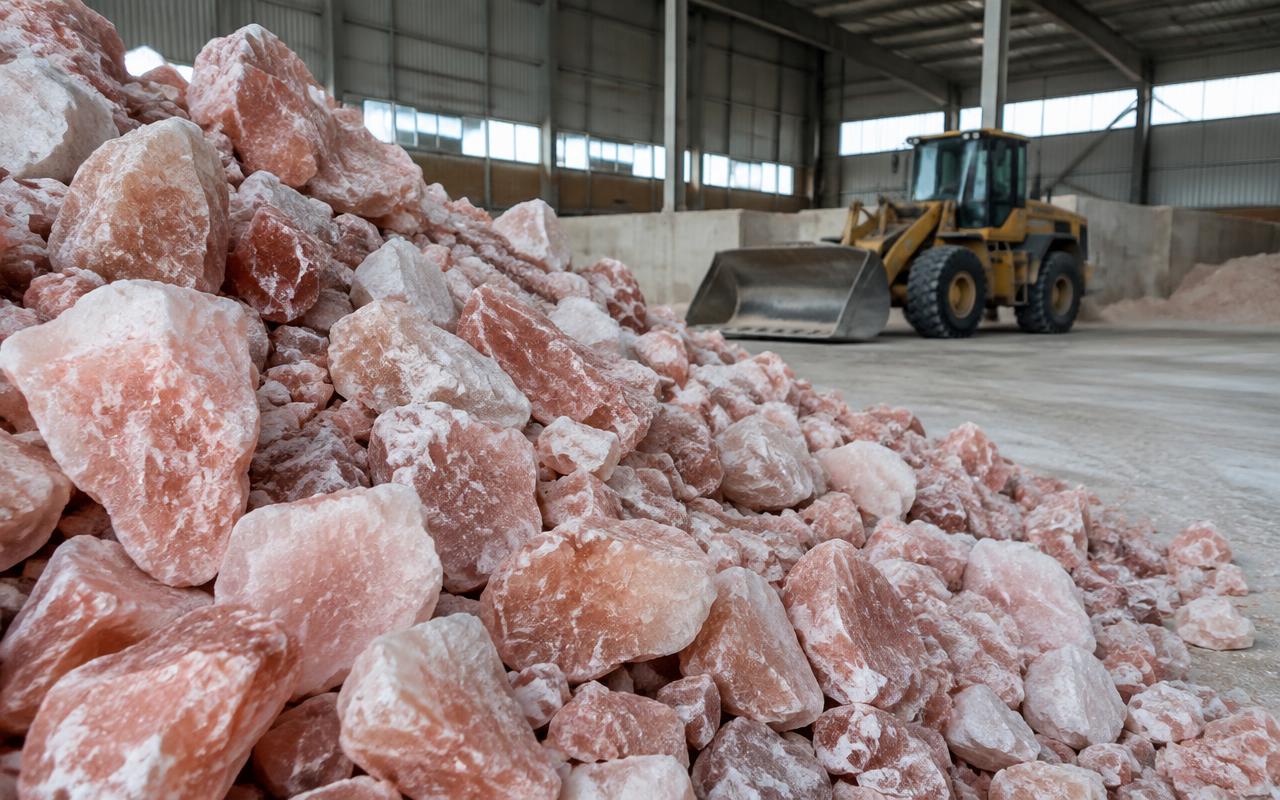
Rock salt can be part of a winter-maintenance plan for roads, yards and other suitable outdoor surfaces. Selecting it is not simply a question of price per tonne: the intended use, weather, equipment, product evidence, storage and environmental controls all matter.
Ratin is an Istanbul-based advisory and facilitation group, not a seller or producer of rock salt. We help businesses define their requirements, organise questions for potential suppliers and coordinate commercial and logistical discussions. Product suitability and operating decisions remain with the buyer, qualified suppliers and the responsible maintenance team.
How rock salt supports winter maintenance
Rock salt is generally a sodium-chloride material. When it dissolves in water, the resulting brine lowers water's freezing point. This can help loosen ice and reduce bonding between ice and a surface under suitable conditions. It does not remove the need for ploughing, inspection or a site-specific winter plan.
Deicing addresses ice or snow already present. Anti-icing is a preventive approach intended to limit bonding before or during a weather event; it is not the same as spreading dry salt indiscriminately in advance. Equipment, material form and application timing must be selected by the responsible operator.
Performance depends on pavement temperature, moisture, precipitation and application method—not air temperature alone. Sodium chloride becomes less effective as conditions become colder. There is no universal application rate or guaranteed result for every site; ask a qualified maintenance professional to assess operating conditions.
Define the application before comparing suppliers
- Identify the surface and use: public road, private access road, parking area or industrial yard. Confirm whether salt is appropriate for the surface and nearby assets.
- Describe the expected weather exposure, drainage, traffic and maintenance arrangements.
- Confirm the spreading equipment and any constraints on particle size, moisture and handling.
- Identify sensitive areas such as vegetation, watercourses, drainage outlets and assets vulnerable to corrosion.
- Establish the required delivery window, storage capacity and contingency plan for adverse weather or transport disruption.
Technical evidence to request
Ask the prospective supplier for a product specification, a representative sample where appropriate, and test information relevant to the intended use. Check sodium-chloride content, particle-size distribution, moisture and insoluble material rather than relying on a label such as “winter grade”. Confirm whether the evidence relates to the proposed product and batch.
Origin, packaging, bulk format, minimum order quantity, available documents and delivery terms must be confirmed for each proposed supply arrangement. Ratin does not publish verified supply specifications or promise availability; technical and commercial information is available on request and subject to supplier verification. No mine ownership, stockholding or certification is implied.
Storage, handling and environmental controls
Keep salt protected from precipitation and uncontrolled runoff, with a suitable covered storage arrangement and site-specific containment measures. Plan safe unloading, handling and access in line with the supplier's safety information and local requirements.
Road salt can contribute to corrosion and affect vegetation, soil and freshwater. More material is not automatically better. Calibrated equipment, appropriate timing and controlled storage help reduce unnecessary use and loss. Operators should follow local environmental requirements and assess risks to concrete, metal structures and drainage systems; “natural” does not mean harmless.
Common procurement problems
An incomplete specification: a quote may look competitive while leaving particle size, moisture, acceptable variation or evidence undefined. Agree the requirements before comparing offers.
Unclear responsibilities: loading, freight, insurance, import arrangements and unloading are not interchangeable. Specify the named place and agreed Incoterm, then check the contract and operational responsibilities with the relevant professionals.
Unconfirmed timing: winter demand and transport conditions can affect delivery. Obtain written confirmation of lead times and do not treat an indicative offer as guaranteed stock.
Insufficient inspection planning: agree sampling, acceptance criteria and how discrepancies will be documented before shipment. A quotation alone is not proof of suitability.
How Ratin can help
We support the preparation of a clear requirement brief, coordination of supplier questions, comparison of documented offers and clarification of commercial terms. We can also help organise discussions with logistics partners and, where relevant, licensed customs brokers selected for the shipment.
Ratin does not certify materials, prescribe spreading rates, operate winter maintenance or file customs declarations. Supplier evidence, independent testing where needed, and professional advice must support the buyer's final decision.
Before you request an offer
- Define the site, surface and intended deicing or anti-icing approach.
- Confirm equipment compatibility and the evidence needed to assess the material.
- State the requested quantity, destination and delivery period as requirements—not assumed availability.
- Check storage, unloading, safety and environmental arrangements.
- Request verified technical information, origin and relevant documentation.
- Clarify acceptance criteria, payment terms, Incoterm and responsible parties.
- Have the responsible professionals review suitability and any import requirements before committing.
Discuss your winter-maintenance sourcing requirement
Need help preparing a rock salt sourcing brief or coordinating with potential suppliers and logistics partners? Contact Ratin or use Request a Quote and select Trade Requirement. You can also email info@ratin.com.tr.
We act as an advisor and facilitator, not the seller of the material. Share your destination, intended use, requested quantity and timing so the discussion starts with your actual requirements.
Further reading
This guide provides general procurement and coordination information, not site-specific engineering, safety, environmental or legal advice. Consult qualified professionals and applicable local requirements for each operation.