
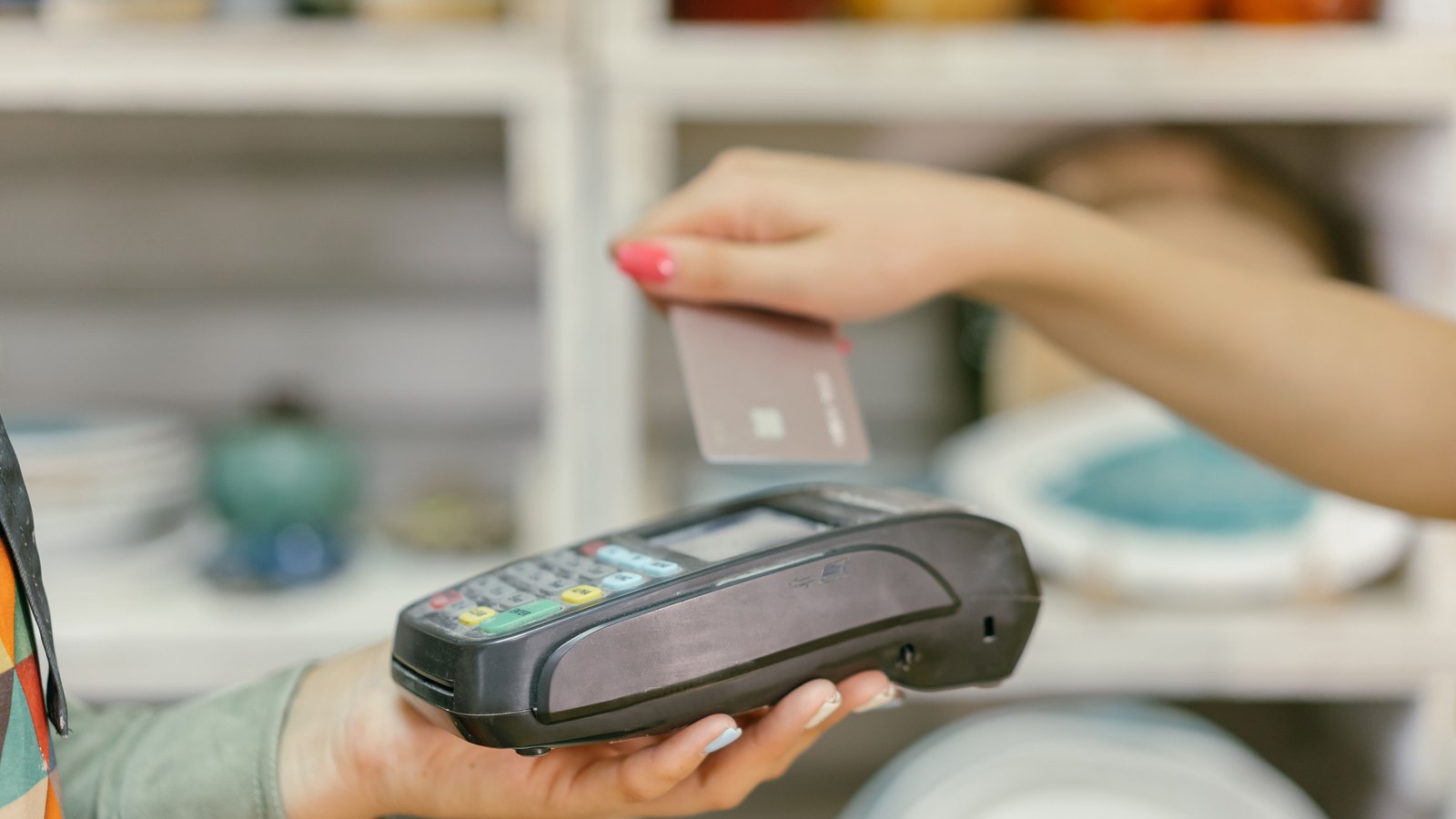
A visitor lands at Istanbul Airport at two in the morning. Their card works at the duty-free counter and fails at the taxi rank. The exchange booth in arrivals offers a rate several points worse than the interbank mid-market. By the time they reach the hotel, they have paid a currency spread, a foreign transaction fee, and a dynamic currency conversion markup they never consciously agreed to — three separate charges on a single evening, none of which the merchant received.
That gap between what a traveller spends and what the local economy actually captures is the problem ezee cash was built to close. Ratin Teknoloji Group's role in that programme is a defined one: we acted as an independent external advisor on commercial expansion into Türkiye and Iraq. ezee cash is an independent company and programme; we do not operate, issue, or process on its behalf.
The friction is structural, not incidental
Cross-border tourist spending in the Türkiye–Iraq corridor runs on infrastructure designed for residents. Domestic card schemes assume a local bank relationship. International schemes assume the traveller will absorb whatever the acquiring bank decides to charge. Cash — still the default for a large share of visitors from Iraq, the Gulf, and Central Asia — moves the friction rather than removing it: exchange offices capture the spread, merchants carry the reconciliation burden, and nothing about the transaction is measurable.
For merchants, the consequences compound. A hotel or a retailer in a tourist district cannot tell which nationality drives which basket size, which campaign brought a customer through the door, or whether a discount actually moved revenue.
What ezee cash does
ezee cash is a travel-card and ATM programme built for foreign visitors. A traveller loads value in local currency on arrival, receives a card usable across a participating merchant network, and gains access to a discount programme tied to that network.
Currency conversion happens once, transparently. The visitor sees the rate at the moment of loading rather than discovering it on a statement six weeks later.
Acceptance is designed around the visitor's actual route. Coverage is built along the arrival-to-checkout path — airports, transit hubs, hotels, retail districts, tourist services — rather than assumed from general card penetration statistics.
The discount programme gives merchants a reason to join. Participating businesses are not simply accepting another payment instrument; they are joining a demand channel with a defined, arriving, high-intent audience.
Our advisory scope
Our mandate covered the commercial side of entering two markets, not the technical build:
- Market-entry sequencing — which cities and which merchant categories to open first, and in what order, based on visitor flow rather than population.
- Commercial structuring guidance — how participation terms, discount economics, and merchant onboarding should be framed so that both sides of the network have a reason to stay.
- Merchant-side go-to-market planning — the arguments, proof points, and materials a field team needs to sign a hotel, a clinic, or a retailer.
- Acquisition advisory — campaign structure, market-native messaging, and measurement design for reaching travellers before departure.
Why Türkiye, then Iraq
The sequence follows the shape of actual visitor flows.
Türkiye is the anchor. High inbound volume, a mature merchant base, dense card acceptance in urban centres, and a regulatory environment that treats payment services as a supervised, licensable activity. A programme that works in Istanbul has already solved the hard problems.
Iraq is the corridor with the sharpest unmet need. Movement between Iraq and Türkiye is heavy in both directions — commercial, medical, educational, and leisure — and disproportionately cash-dependent. The gap between the volume of travel and the availability of usable cross-border payment infrastructure is wide, which is precisely what makes it addressable.
What we learned that transfers
Traveller intent is a timing problem, not a targeting problem. The window that matters opens roughly two to four weeks before departure and closes on arrival. Campaigns built around destination interest without that timing layer waste most of their budget on people who are not going anywhere.
Language is not a translation task. The terms a Gulf traveller uses to search for a prepaid card in Istanbul are not the terms a European traveller uses, and neither maps cleanly onto the English keyword.
Merchant acquisition converts on proof, not on positioning. Businesses join a network when they can see what it delivered for comparable businesses — which makes documented case studies more valuable than any creative concept.
Compliance is part of the advice
A payment programme spanning multiple jurisdictions carries obligations that cannot be retrofitted: customer identification, transaction monitoring, sanctions screening, and data protection under both KVKK and GDPR. These shape what a product can do — and what its marketing can claim. Advertising for regulated financial products is subject to platform-level review, and campaigns that promise outcomes the product cannot deliver risk account-level enforcement that removes the channel entirely. Our approach to compliance applies to campaigns as much as to the underlying service.
The merchant-network and advertising side of the tourism ecosystem is covered in a separate mandate — see our advisory work with IoTourist.
For enterprises planning similar cross-border expansion, our business units cover the commercial, logistics, and acquisition components as a single engagement. Start a conversation with the team in Istanbul.