
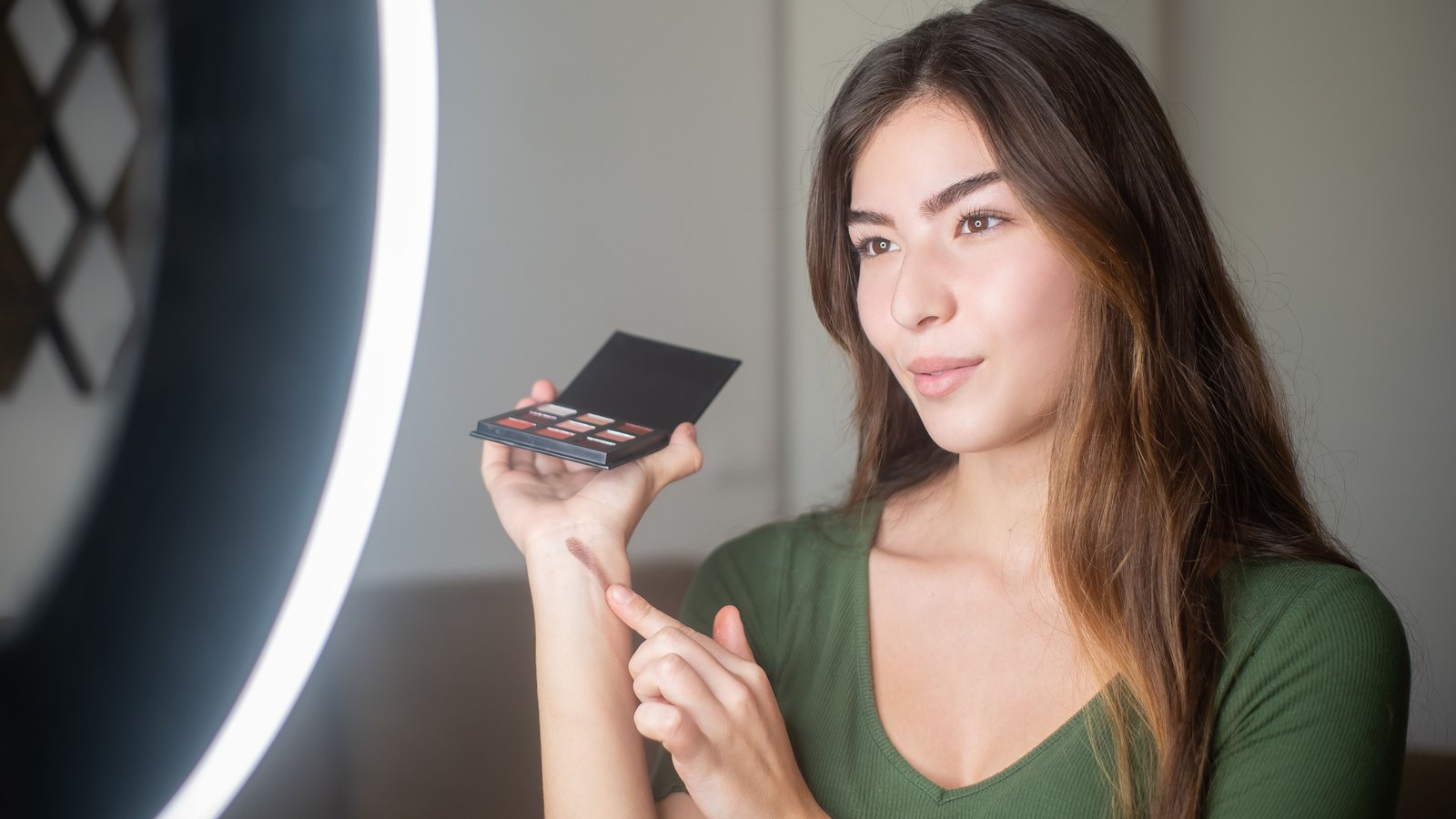
Beauty is the category where influencer marketing was invented, and it is still the category where it is most often run badly.
The reason is that the model looks simple. Find creators with audiences that match the product, pay them to post, watch sales. Brands that run it this way get a predictable outcome: a burst of impressions, a discount code with a handful of redemptions, an agency report full of reach numbers, and no defensible answer to whether any of it moved revenue.
The brands that get compounding returns from the same budget do four things differently.
1. They treat creator tiers as different products, not different price points
The most common structural error is treating a creator roster as a single line item where the only variable is follower count. Tiers behave differently enough that they should be budgeted, contracted, and measured separately.
Nano and micro creators (roughly 5k–100k). The strongest performers for conversion in beauty, for a specific reason: audience trust in this range has not yet been diluted by volume of sponsored content. Their content also performs unusually well as paid creative, which is where most of the value actually comes from. Cost per asset is low enough to run many in parallel, which matters because creative testing needs volume.
Mid-tier (100k–500k). The awkward tier. Expensive enough to require justification, rarely large enough to drive standalone awareness. Worth using where a creator has genuine category authority — a licensed aesthetician, a makeup artist with professional credentials — rather than general lifestyle reach. In beauty, demonstrated expertise outperforms audience size at this level.
Macro and celebrity (500k+). An awareness and credibility instrument, not a performance channel. Justified for a launch, a category entry, or a repositioning. Judging this tier on last-click attribution will always produce a disappointing number, because that is not what it does.
The failure mode is spending the entire budget in the middle tier because it feels safe. It is the tier with the weakest case at both ends.
2. They contract for usage rights, not for posts
This is the single highest-leverage change available to most beauty brands, and it costs nothing to implement.
A standard influencer agreement buys a post that lives on the creator's profile and decays within seventy-two hours. An agreement that includes paid usage rights buys an asset the brand can run as advertising creative for six or twelve months across its own accounts.
The economics are not close. Creator-produced content consistently outperforms studio-produced creative in beauty performance campaigns — it looks native, it demonstrates application and texture in real conditions, and it does not trigger the ad-avoidance reflex that polished commercial production does. A single strong creator asset amplified with paid budget will often deliver more than the organic post ever did.
What to secure in the contract:
- Paid usage rights, duration and platforms specified explicitly. Six months minimum, twelve preferred.
- Whitelisting / partnership ad permissions — the ability to run ads from the creator's own handle rather than the brand's. This preserves the credibility of the creator's voice while giving the brand targeting control, and it typically outperforms the same creative run from the brand account.
- Raw footage delivery, not just the published edit. Raw assets can be recut into multiple ad variants, which multiplies the value of a single shoot.
- Exclusivity scope, narrowly defined. Blanket category exclusivity is expensive and usually unnecessary; a defined window around the campaign is sufficient.
Brands that shift from buying posts to buying assets typically find that the same budget produces several times the working creative volume.
3. They measure with methods that can be wrong
Influencer measurement in beauty is dominated by two metrics that cannot fail: reach and engagement rate. Neither can produce a negative result, which is precisely why they persist in reporting.
More useful:
Discount codes and affiliate links — with known limits. They undercount substantially. A viewer who sees a creator post and buys three weeks later through search will never be attributed. Treat code redemptions as a floor, not a measurement.
Holdout testing. The only method that answers the actual question. Run the programme in a set of markets or audience segments and withhold it in comparable ones, then compare total category sales rather than attributed sales. It requires deliberately not spending in some places, which is a difficult internal conversation and the reason it is rarely done.
Branded search lift. Beauty has a strong signal here. A working influencer programme produces a measurable rise in searches for the brand and product names, visible within days. It is cheap to monitor and hard to fake.
Creative performance in paid. If a creator's asset is amplified, cost per acquisition of that asset against the account benchmark is a clean, comparable number — and it also tells you which creators to re-book, which is a decision most brands make on vibes.
4. They plan for the creative decay curve
Beauty creative fatigues faster than almost any other category. The same asset that delivered strong efficiency in week one is frequently unviable by week five, particularly on short-form video platforms where audience overlap accumulates quickly.
This has a direct operational consequence: the constraint on scaling a beauty performance account is creative supply, not budget. A brand that can produce forty usable assets a month can spend at a level a brand producing four cannot, regardless of how much money either has.
This is the real strategic argument for a broad nano and micro roster. It is not a cost-saving measure. It is a creative production pipeline that happens to come with distribution attached.
Practical implications:
- Refresh rate targets, set explicitly. Know how many new assets the account consumes per month and build the roster to supply it.
- Structured variation. Same creator, multiple hooks — first three seconds changed, everything else identical. The opening is where most of the performance difference lives.
- Retire on a metric, not on a feeling. Frequency thresholds and CTR decay curves tell you when an asset is done, well before anyone notices it in a review.
The compliance layer, which is not optional
Beauty carries real regulatory exposure and it varies by market.
Disclosure. Sponsored content must be identified as such. Enforcement intensity differs by jurisdiction, but the platforms enforce independently of the regulators, and undisclosed content risks removal regardless of local rules.
Claims. Cosmetic products may not make therapeutic claims. A creator saying a serum "cures" or "treats" a condition can convert a cosmetic into a regulated medicinal claim, and liability does not stay with the creator. Brief this explicitly in writing, and review content before publication rather than after.
Before-and-after imagery. Restricted or prohibited in several markets, and separately restricted by the advertising platforms — Meta in particular. An asset that is legal locally may still be unusable as paid creative.
The practical control is a written creator brief specifying prohibited claim language, plus pre-publication review. Both are cheap. Remediation after a regulator or a platform acts is not.
Where this sits in the wider account
Influencer marketing works poorly as a standalone line and well as a creative and credibility layer feeding everything else: paid social, paid search brand defence, retail media, and the brand's own channels.
The brands that get the most from it treat the creator programme as the top of a system — content produced there, amplified through paid, measured against the whole account rather than against its own reach numbers.
We manage advertising accounts in-house for enterprises across beauty and cosmetics alongside ten other sectors, which means creator programmes are built inside the media plan rather than beside it. Our approach is set out under business units, with related work under case studies and further analysis in publications.
To discuss a creator programme for a beauty or cosmetics brand, contact us.